

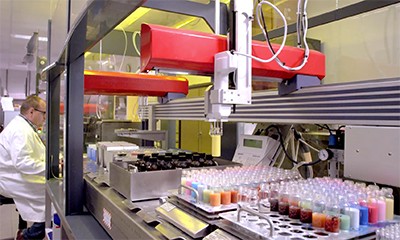
Ink manufacturing is a complex industrial process that requires precise control over mixing, grinding, and dispersion to achieve consistent color quality and stability. Different industries such as printing, packaging, textiles, and publishing rely on specialized equipment to produce inks with specific performance characteristics. As demand for high-quality printing continues to grow, the need for efficient production systems has also increased.
An Ink Production Machine is designed to handle various stages of ink formulation, including pigment dispersion, blending, and fine grinding to ensure uniform texture and color consistency. Ink Production Machine systems are widely used in modern manufacturing setups to improve efficiency, reduce waste, and maintain strict quality standards across different ink types.
High-Speed Dispersers
High-speed dispersers are one of the most commonly used machines in ink production. They are primarily used for initial mixing and dispersion of pigments into liquid binders.
These machines work by using a high-speed rotating blade that creates strong shear forces, breaking down pigment agglomerates. They are especially effective for:
- Water-based inks
- Solvent-based inks
- Initial pre-mixing stages
High-speed dispersers are valued for their simplicity and efficiency in early-stage processing.
Bead Mills for Fine Grinding
Bead mills play a crucial role in achieving ultra-fine particle sizes required for high-quality ink production. They use small grinding media to reduce pigment particles to micron or even nano levels.
Key advantages include:
- High dispersion efficiency
- Uniform particle size distribution
- Improved color strength and stability
These machines are widely used in premium printing inks where precision and consistency are critical.
Three-Roll Mills
Three-roll mills are traditionally used in ink manufacturing for high-viscosity materials. They work by passing the ink through three horizontally arranged rollers rotating at different speeds.
This process helps:
- Achieve fine dispersion of pigments
- Improve ink smoothness
- Enhance color uniformity
Three-roll mills are commonly used in offset inks and specialty printing applications.
Mixing Tanks and Blending Systems
Mixing tanks are essential for combining raw materials and ensuring uniform consistency before or after grinding. These systems are often equipped with agitators and temperature control features.
Their main functions include:
- Homogenizing raw materials
- Maintaining stable viscosity
- Supporting batch production processes
They are widely used in large-scale industrial ink production facilities.
Vacuum Deaeration Systems
Air bubbles trapped in ink formulations can affect print quality and stability. Vacuum deaeration systems are used to remove these air pockets during production.
Benefits include:
- Improved ink density
- Enhanced printing performance
- Reduced surface defects
These systems are particularly important in high-end printing applications where precision is essential.
Inline Production Systems
Inline ink production systems integrate multiple processing stages into a continuous workflow. These advanced setups combine mixing, grinding, and dispersing into a single automated line.
Advantages include:
- Continuous production flow
- Reduced manual handling
- Higher production efficiency
- Consistent product quality
Inline systems are commonly used in large-scale manufacturing environments.
Applications Across Industries
Ink production machines are used in a wide range of industries, each requiring specific ink properties. Some major application areas include:
- Packaging Industry: High-quality printing inks for labels and cartons
- Textile Industry: Specialty inks for fabric printing
- Publishing Industry: Offset and digital printing inks
- Industrial Printing: Durable inks for labels, plastics, and metals
Each application demands different formulations and performance standards, making machine selection highly important.
Conclusion
Ink production involves multiple stages of processing, each requiring specialized equipment to ensure quality and consistency. From high-speed dispersers to bead mills and inline systems, different machines serve specific roles in the manufacturing process.
Understanding the types of ink production systems and their applications helps manufacturers choose the right setup for their needs. With the growing demand for high-performance printing solutions, efficient and well-designed ink production systems continue to play a vital role in modern industrial manufacturing.