
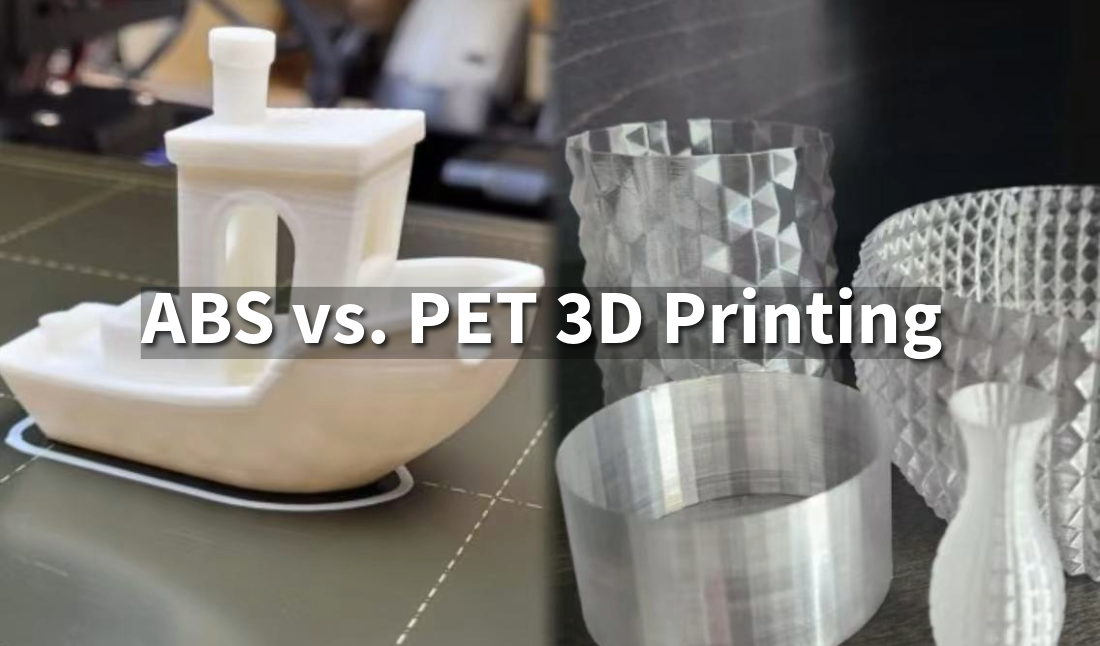
In many applications, PETG-basic offers a dependable combination of durability and printability, making it suitable for both hobbyist and functional projects. Its consistent performance and versatility have made it a widely used filament in desktop 3D printing.
What Is PETG-Basic?
PETG-Basic is a standard formulation of PETG (Polyethylene Terephthalate Glycol), designed to provide balanced mechanical and printing properties. It is a thermoplastic material modified with glycol to improve clarity, reduce brittleness, and enhance ease of processing.
Compared to more advanced composite PETG variants, PETG-Basic focuses on simplicity and stability, making it ideal for everyday printing tasks.
Key Features of PETG-Basic
PETG-Basic offers a combination of characteristics that make it suitable for a wide range of applications.
1. Balanced Strength and Flexibility
PETG-Basic provides moderate flexibility while maintaining strong structural integrity.
- Resistant to cracking under stress
- Suitable for functional parts
- Better impact resistance than PLA
This balance makes it useful for parts that need both durability and slight flexibility.
2. Easy Printability
One of the biggest advantages of PETG-Basic is its ease of printing compared to other engineering materials.
- Low warping during printing
- Good layer adhesion
- Compatible with most FDM printers
- No need for enclosed printing environments
This makes it accessible for beginners and professionals alike.
3. Chemical and Moisture Resistance
PETG-Basic performs well in environments where exposure to moisture or mild chemicals is expected.
- Resistant to water absorption
- Stable in humid conditions
- Suitable for outdoor use
This property increases its durability in real-world applications.
4. Smooth Surface Finish
PETG-Basic produces a glossy or semi-gloss finish that enhances the visual quality of printed parts.
- Clean surface appearance
- Suitable for display models
- Can be post-processed if needed
Benefits of Using PETG-Basic
PETG-Basic offers several practical advantages that make it a preferred choice for many users.
Reliable Performance
It delivers consistent results with minimal printing issues when proper settings are used.
Cost-Effective Solution
Compared to advanced composite filaments, PETG-Basic is more affordable while still offering strong performance.
Versatile Applications
It can be used for both decorative and functional parts, reducing the need for multiple filament types.
Beginner-Friendly Material
Its forgiving printing behavior makes it suitable for users who are new to 3D printing.
Common Applications of PETG-Basic
PETG-Basic is widely used across different industries and personal projects.
Functional Prototypes
It is commonly used for testing designs before full-scale production.
- Product prototypes
- Mechanical models
- Design validation parts
Household and Everyday Items
PETG-Basic is suitable for practical items used in daily life.
- Storage containers
- Hooks and brackets
- Replacement parts
Outdoor Components
Its resistance to moisture makes it suitable for outdoor environments.
- Garden tools
- Protective covers
- Enclosures
Educational and Hobby Projects
Due to its ease of use, it is popular in schools and maker communities.
- STEM learning models
- DIY projects
- Creative designs
Printing Tips for PETG-Basic
To achieve the best results, proper printing settings are important.
- Use nozzle temperatures between 220°C and 250°C
- Set bed temperature around 70°C to 90°C
- Adjust retraction settings to reduce stringing
- Use moderate cooling for better layer bonding
Proper calibration ensures smoother prints and improved strength.
Limitations of PETG-Basic
While PETG-Basic is versatile, it does have some limitations:
- Can produce stringing if not calibrated properly
- Slightly softer surface compared to ABS
- Not suitable for very high-temperature applications
- May require fine-tuning for optimal results
Understanding these limitations helps improve print quality and material selection.
Conclusion
PETG-Basic is a reliable and versatile filament that offers a strong balance between performance and ease of use. Its durability, moisture resistance, and simple printing characteristics make it suitable for a wide range of applications, from prototypes to functional everyday items.
For users seeking a dependable and beginner-friendly material, PETG-Basic provides a practical solution that delivers consistent and high-quality results across various 3D printing projects.